From the Prologue of Ochrid
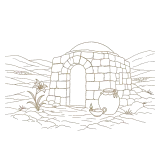
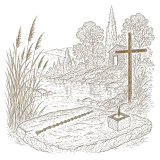
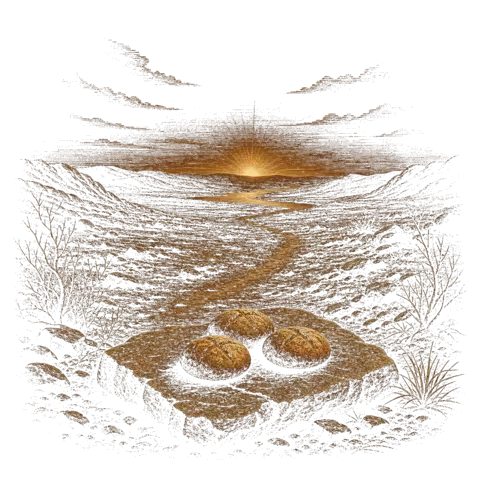
The life of this wondrous saint was written by Saint Sophronios, Patriarch of Jerusalem. A certain hieromonk, the Elder Zosimas, once withdrew during the Great Fast into the wilderness beyond the Jordan for a journey of twenty days. At one point he beheld a human being, with a body parched and naked, and hair white as snow, which began to flee from the gaze of Zosimas. The elder ran for a long time, until that being lay down beside a stream and cried out: "Abba Zosimas, forgive me for the Lord's sake, I cannot turn to face thee, for I am a woman, naked!" Then Zosimas threw her his outer garment; she wrapped herself in it and appeared before him. The elder was astonished to hear his own name from the lips of that unknown woman. After his long insistence the woman recounted to him the story of her life. She had been born in Egypt, and from her twelfth year began to live dissolutely in Alexandria, spending a full seventeen years in debauchery. Driven by the carnal fire of lust, she one day boarded a ship sailing to Jerusalem. Upon arriving in the Holy City she too desired to enter the church and venerate the Precious Cross, but some invisible force held her back and would not allow her to enter. In great fear she looked upon the icon of the Most Holy Theotokos in the narthex and prayed to Her, that She might permit her to enter and kiss the Precious Cross, confessing her sinfulness and impurity and promising that she would afterward go wherever the Holy Most Pure One might direct her. Then she was permitted to enter the church. After venerating the Cross she came out again into the narthex before the icon and gave thanks to the Theotokos, and at that moment she heard a voice: "If thou dost cross the Jordan, thou shalt find good peace!" She immediately bought three loaves of bread and set out for the Jordan, where she arrived that same evening. The next day she received Holy Communion at the Monastery of Saint John and crossed the river. And she lived in the wilderness for a full forty-eight years, in exceeding great torments, in fear, in combat with passionate thoughts as with wild beasts. She fed on herbs. After that, when she stood in prayer, Zosimas saw her standing raised up in the air. She asked him to bring her Holy Communion the following year to the bank of the Jordan, and she would come to receive it. The following year Zosimas came with the Holy Gifts in the evening to the bank of the Jordan, but wondered how the saint would cross the Jordan. Then he saw by the moonlight that she came to the river, made the sign of the Cross over it, and walked upon the water as upon dry land. When he gave her Communion, she asked him to come the following year to that same stream where they had first met. Zosimas went and found her body dead in that place, and above her head written in the sand: "Bury, Abba Zosimas, in this place the body of humble Mary; render dust unto dust. I departed on the first of April, on the very night of the saving Passion of Christ, after partaking of the Divine Mysteries." From this inscription Zosimas learned her name for the first time, and also this second and awesome miracle — that she had arrived at that stream on the very night she received Communion the previous year, a distance that had required him twenty days of travel. And so Zosimas buried the body of the wondrous Saint Mary of Egypt. When he returned to the monastery he recounted the entire history of her life and the miracles he had personally witnessed. Thus does the Lord know how to glorify repentant sinners. Saint Mary is also commemorated on the fifth week of the Great Fast. The Church sets her before the faithful in those fasting days as a model of repentance. She reposed around the year 530.