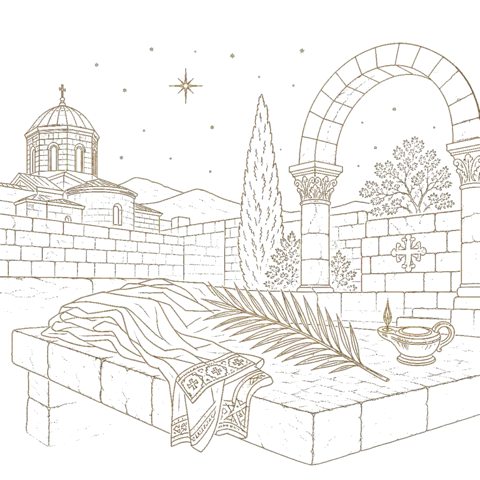
The life of St Febronia
Her aunt, concerned above all for her spiritual welfare, held her to a stricter discipline than the rest of the sisters, including the community's custom of setting aside every Friday entirely for prayer and the reading of Scripture, a duty that fell most often to Febronia herself. Word of her manner of life spread through the surrounding city, and a young widow named Hieria, still a pagan, began seeking her out and was in time baptized through her guidance, bringing her own family with her into the Church. When the persecution under Diocletian reached Nisibis, an imperial official named Selenus arrived to root out Christians there and, learning of Febronia's reputation, had her brought before him and pressed her at length to renounce her faith; she would not, and she was put to death for her refusal, still only twenty years old. An eyewitness among her own sisters, the nun Thomais, set down the account of her life and death not long afterward, and her relics were carried to Constantinople in 363, where the miracles reported at them extended her memory well beyond the small Mesopotamian community that had first raised her.