The life of St Cuthbert the Wonderworker of Lindisfarne
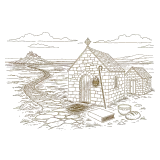
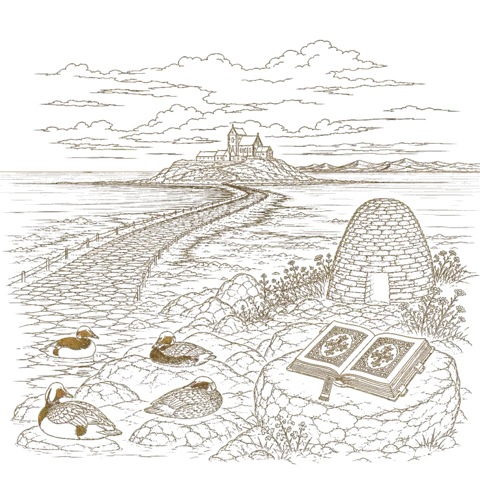
He rose to prior of Melrose around 662 and of Lindisfarne itself around 665, before stepping back in 676 to a hermitage on the small tidal island of Inner Farne, where he built his own cell and oratory and, among his other labors there, took the seabirds nesting on the island under his protection, an act remembered today as one of the earliest recorded instances of wildlife conservation in England. Elected bishop in 684, first to Hexham, he exchanged that see with Eata to become bishop of Lindisfarne instead, and resigned before the end of 686, sensing that his death was near, returning to his island to die there on March 20, 687.
When his tomb was opened eleven years later, his body was recorded, in the account the Venerable Bede later set down, as whole and undecayed, its joints still supple as though he merely slept, a discovery that gave rise to the cult that made him known in his own age as the wonder-worker of England. During the Danish invasions of the ninth century monks carried his body with them through years of wandering before it came to rest at last at Durham, where his relics were again found, by report, undecayed when the shrine there was later opened.
He is remembered as a hermit drawn reluctantly into high office, and as a saint whose body, tradition holds, refused for centuries to show the ordinary marks of death.