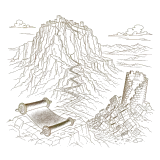
The fast takes its other name from the Apostle Philip, whose feast on November 14 is the day before it begins. By tradition its forty days recall the forty days Moses fasted on Mount Sinai before he received the tablets of the Law. Moses fasted to receive words written on stone; the Church fasts to receive the Word Himself, born in the flesh.
It is a gentler fast than Great Lent, and it grows brighter as it goes. On November 21 the Church keeps the Great Feast of the Entry of the Theotokos into the Temple, and from that day the first hymn of Christmas is sung at Matins: "Christ is born, glorify Him!" Two Sundays before the feast the Church remembers the Holy Forefathers, the righteous of the Old Testament who awaited Christ, and on the Sunday before it the Fathers, His ancestors according to the flesh. The forefeast of the Nativity begins on December 20, and the fast closes on Christmas Eve.
As always, the fast is a means and not the end. Its purpose is the readied heart, and its keeping is fitted to each person with their priest. The point of the forty days is that when the feast comes, one is not too full to receive it.