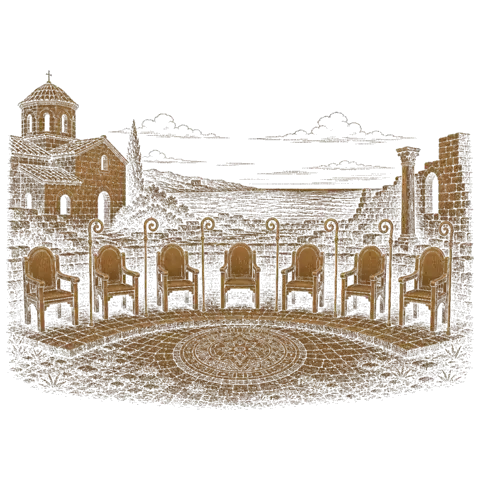
From the Prologue of Ochrid
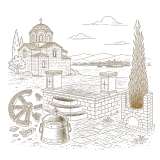
These are the holy seven priest-martyrs of Cherson: Basil, Ephraim, Eugene, Elpidius, Agathodorus, Aetherius, and Capito. All of these were bishops of Cherson at various times, and all suffered (Aetherius alone died peacefully) at the hands of unbelievers — whether Jews, Greeks, or Scythians. All of them went to those wild regions as missionaries, sent by the Patriarch of Jerusalem to carry the light of the Gospel. All were tormented and suffered for the sake of their Lord. Basil raised from the dead the son of a certain prince in Cherson, which enraged the Jews, and they brought charges against him. He was bound by the feet and dragged through the city streets until he gave up his soul. Ephraim was beheaded by the sword. Eugene, Elpidius, and Agathodorus were beaten with clubs and stones until they gave their souls to God. Aetherius lived in the time of Constantine the Great and governed the Church in freedom and peace, built a great church in Cherson, and reposed peacefully. When the last of them, Capito, was sent as bishop, the wild Scythians demanded a sign from him before they would believe. They themselves proposed that he enter a fiery furnace, and if he did not burn, they would all believe in Christ. With fervent prayer and hope in God, Capito put on his archiepiscopal omophorion and, making the sign of the cross, entered the blazing furnace with his heart and thoughts lifted up to God. He stood in the flames for about one hour, and without any injury — neither to his body nor to his clothing — came out unharmed. Then all cried out: there is one God, the God of the Christians, great and mighty, who preserved His servant in the fiery furnace! And the entire city and all the surrounding region was baptized. This miracle was much spoken of at the Council of Nicaea. And all glorified God and praised the steadfast faith of Saint Capito. But it befell Capito that on the road he was seized by pagan Scythians at the river Dnieper and drowned in the river. All suffered at the beginning of the fourth century.