From the Prologue of Ochrid
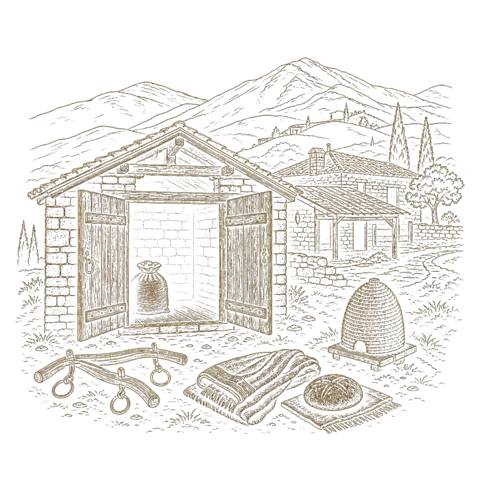
Philaret was from the village of Amnia in Paphlagonia. At first Philaret was a very wealthy man, but distributing much alms to the poor, he became utterly impoverished. But he did not fear poverty; rather with hope in God, who said: Blessed are the merciful, for they shall obtain mercy (Matt. 5:7), he continued works of mercy without regard to the displeasure of his wife and children. Once while he was plowing, a man came to him and complained that his ox had died in the yoke, so he could not plow with one ox alone. Philaret unharnessed one of his oxen and gave it to him. He gave his last horse also to someone who was called to go to war with a horse. He gave the calf from his last cow, and when he noticed that the cow was lowing for the separated calf, and the calf for the cow, he called the man back and with the calf gave him the cow as well. And aged Philaret remained without food in an empty house. But he prayed to God and hoped in God. And God did not leave the righteous man to be put to shame in his hope. At that time Empress Irene reigned with her young son Constantine. According to the custom of that time, the empress sent people to seek throughout the whole empire the best and most distinguished maiden, with whom she would marry the emperor's son. By God's providence these people stopped for lodging at Philaret's house, saw his granddaughter Maria, daughter of his daughter Hypatia, beautiful and gentle granddaughter Maria, and took her to Constantinople. The emperor was pleased with the maiden and married her, and Philaret and all his family were moved to the capital and he was given great honor and wealth. But Philaret was not made proud by such sudden fortune; rather, grateful to God, he now continued to do good works even more than before. And he did them thus until his very death. In his ninetieth year he called his children, blessed them and taught them to hold to God and God's law, and with prophetic spirit, like the patriarch Jacob of old, he prophesied to each of them how they would live out this age. Then he lay down in the Rodolphius monastery and gave up his soul to God. Before death his face shone like the sun, and after death an extraordinary fragrant smell came from him, and there were miracles from his relics. This righteous man of God reposed in 797. His wife Theozva as well as all his children and grandchildren lived in a God-pleasing manner and reposed in the Lord.
“Aged Philaret remained without food in an empty house. But he prayed to God and hoped in God. And God did not leave the righteous man to be put to shame in his hope.”