The life of St Ninian of Scotland
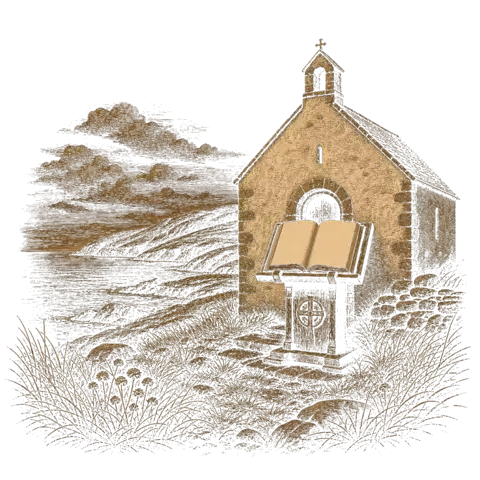
Because Ninian raised its church in stone, an unusual method of building among the Britons of that age, the place came to be known as Candida Casa, the White House.
The historian Bede, writing three centuries later in 731, remains the chief ancient witness to Ninian's life, naming him missionary to the Southern Picts and founder of that same house at Whithorn. He and his companions worked to steady the weakening Christian communities of Roman Britain even as they carried the Gospel outward to the still-pagan Picts, taking as something of a model the example of Martin of Tours, to whom Ninian dedicated his own church; how far that mission reached can be guessed from the very old churches bearing Ninian's or Martin's name found as far off as Orkney and Shetland.
Whithorn remained, long after him, one of Scotland's great places of pilgrimage, visited even by later monarchs drawn there by his memory.