From the Prologue of Ochrid
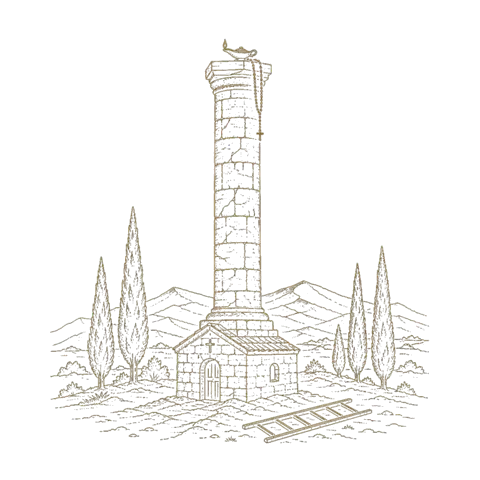
Alypius was born in Adrianople, a city in Paphlagonia, and from his youth was dedicated to God for service. As a deacon he served in the church under Bishop Theodore in that city. But desiring the solitary life, prayer, and contemplation of God, Alypius withdrew to a certain pagan cemetery outside the city, from which people fled as from a place of terror because of frequent demonic apparitions. There he erected a cross and built a church in honor of Saint Euphemia, who had appeared to him in a dream. Beside the church he raised a high pillar, climbed upon it, and spent on it in fasting and prayer a full fifty-three years. Neither the mockery of men nor the malice of demons could remove him from there or shake him in his purpose. Especially from demons this saint endured countless afflictions. Not only did demons frighten him with various apparitions, but they also struck him with stones and gave him no peace day or night for a long time. But valiant Alypius protected himself from demonic power with the sign of the Cross and the name of Jesus. Finally the defeated demons left him and fled, and people began to honor him and come to him for prayer, comfort, instruction, and healing. Around his pillar two monasteries were built, on one side a monastery for men and on the other for women. In the women's monastery lived both his mother and his sister. Saint Alypius guided the monks and nuns from his pillar by example and words, and shone for all like the sun from heaven, pointing the way to salvation. Such grace did this God-pleaser have that heavenly light often illumined him, and above him a pillar of that light rose to heaven. Alypius was a wondrous and mighty wonderworker both during his life and after his death. Having lived one hundred years, he reposed in 640 in the time of Emperor Heraclius. Of his holy relics, the head is preserved in Koutloumousiou Monastery on the Holy Mountain.