The life of St Julian of Cenomanis
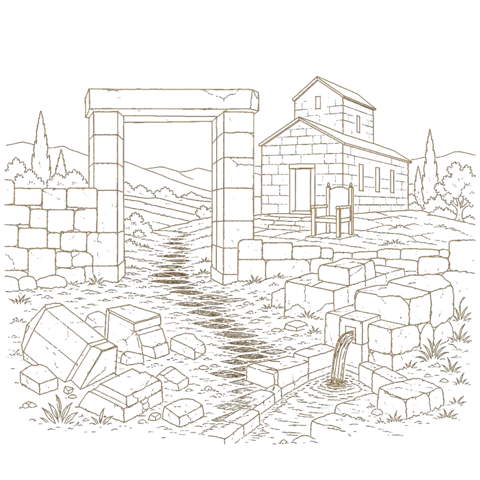
He is said to have found the city suffering a severe shortage of water, and to have struck the ground with his staff in prayer until a spring gushed forth, a wonder that won him the trust of the city and, with it, the conversion of its leading citizen, whose own house was given over to become Le Mans's first church.
It should be said plainly that the historical record behind this account is thin and late. The main source for Julian's life was written centuries after he was supposed to have lived, and modern scholarship does not treat it as reliable history; no independent record of Julian exists from before the seventh century, and some later medieval tradition went further still, attempting to identify him as one of Christ's own seventy-two disciples or even as Simon the Leper renamed at baptism, an attempt, in the judgment of modern historians, to claim an apostolic origin for the see rather than to preserve an actual fact. Modern historians increasingly regard Julian as substantially a legendary figure, shaped to serve the needs of a much later church rather than a securely attested figure of the apostolic or sub-apostolic age.