The life of St Brigid of Kildare
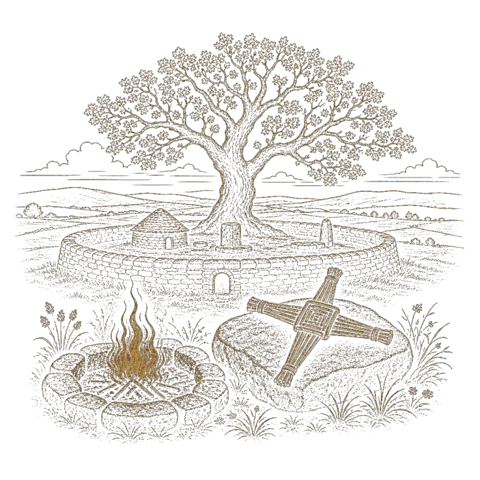
With a small band of companions she settled at last on the plains of Kildare, and beneath a great oak tree there she raised a monastery that became known as Cill-Dara, the church of the oak. As its abbess she led a community that in time included both women and men, a rare arrangement that spoke to the respect and authority she carried.
Kildare grew under her guidance into one of the most honored monasteries in Ireland, drawing visits and devotion from across the wider Christian world, and Brigid herself came to be remembered among the Irish as second only to Patrick in their affection, called the Mary of the Gael. It should be said plainly that the written Lives of Brigid, none composed until generations after her death, do not agree closely with one another on the particulars of her story, so that much of the specific narrative handed down about her rests more securely on long veneration than on settled history. She died at Kildare around the year 525 and was buried before her church's altar, her relics later carried to rest alongside those of Patrick and Columba.