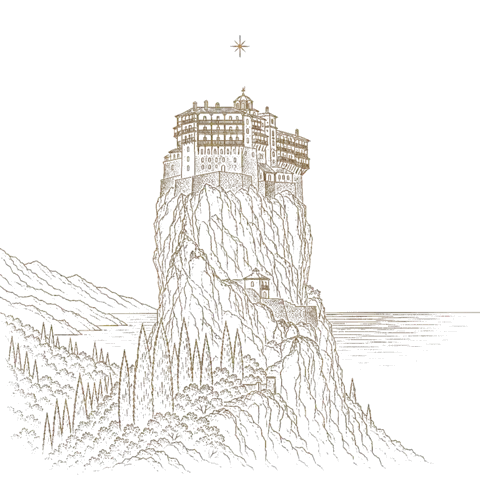
The life of St Simon the Outpourer of Myrrh
He built it on that height and called it New Bethlehem.
The building went forward through real hardship, which the Church remembers as overcome through the prayers of the elder who had first guided him. The monastery he raised, and Simon's own reputation, drew many men to the monastic life, but the same height also drew raiders who came to plunder it; tradition holds that they were struck blind by an unseen power and only received back their sight, and with it a changed heart, after Simon received and forgave them, some remaining afterward as monks themselves. Church tradition places his repose in the thirteenth century, in 1287 by the commonly repeated date, though the exact century of the founding is not settled among historians. In deep old age he was given to know the hour of his death, gathered his disciples, gave them his final blessing, and reposed. From that night, it is said, a fragrant myrrh began to flow from his relics, working healings for years afterward, which is how he came to be called the Myrrh-gusher, and how his monastery, rebuilt generations later, came to be called Simonopetra, the Rock of Simon.